
Activities
CONTENTS
Implementation of the Project on Tourism Development in Long Khanh City.
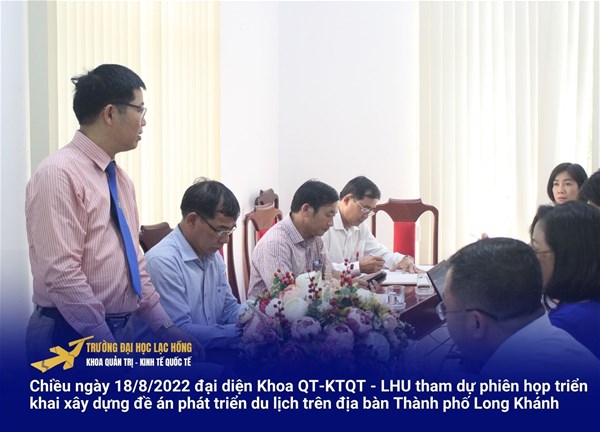
At 14:00 on 18 August 2022, at the People’s Committee of Long Khanh City, Dong Nai Province, a meeting was held to implement the development of the Project on Tourism Development in Long Khanh City.
Attending the meeting:
From the People’s Committee of Long Khanh City:
-
Mr. Tang Quoc Lap – Vice Chairman of the People’s Committee of Long Khanh City;
-
Ms. Lam Ngoc Thao – Deputy Head of the Finance and Planning Division;
-
Ms. Nguyen Bich Hanh – Head of the Economic Division;
-
Mr. Nguyen Minh Tuan – Head of the Natural Resources and Environment Division;
-
Ms. Truong Thi Huong – Head of the Culture Division;
-
Mr. Pham Chin – Deputy Director of the Center for Culture, Information and Sports;
-
Mr. Tran Van Tan – Head of the Urban Management Division.
From Lac Hong University:
-
PhD Nguyen Van Tan – Dean of FAIE;
-
MB Phan Van Hai – Head of the Tourism Operations Management Division;
-
MB Vu Duc Cuong – Head of the Tourism Guiding Operations Division;
-
Nguyen Thi Thuy An – Probationary Lecturer of Tourism and Travel Management;
-
Dang Minh Thuat – Probationary Lecturer of Tourism and Travel Management;
-
Mr. Vo Thai Sinh – Specialist of FAIE.
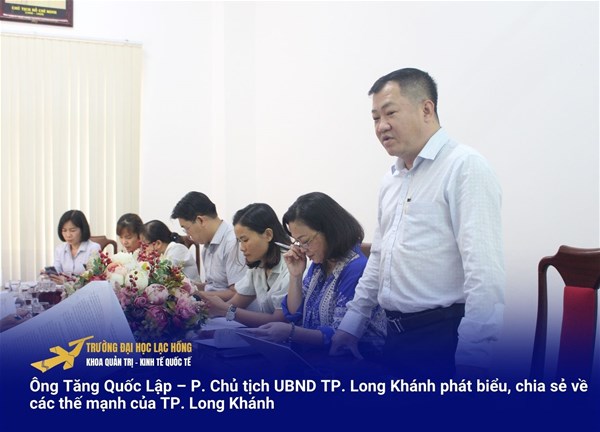
During the meeting, on behalf of the People’s Committee of Long Khanh City, Mr. Tang Quoc Lap – Vice Chairman of the City People’s Committee – delivered remarks and shared information about the strengths of Long Khanh City, including its geographical location, favorable and cool climate with temperatures 2–5 degrees lower than neighboring areas, and its potential for tourism development. Historically, Long Khanh was once a separate province, with heroic victories and numerous historical relics preserved from the resistance wars against the French and especially against the Americans.
In recent years, Long Khanh has continuously developed, particularly in tourism. However, its development has not yet been strong and sustainable, and many limitations remain to be addressed. At the meeting, Mr. Lap presented the current status of tourism development during the period 2017–2022, including leadership and direction; the situation of community-based tourism activities; promotion and enhancement of historical relic values; infrastructure for tourism development; support for building and developing tourism products; tourism communication and promotion, brand building for fruits and agricultural products, trade promotion associated with garden-based eco-tourism; and especially training, capacity building, and human resource development. Upon review, many achievements were recognized. Local specialties such as fruits, and several communes focusing on developing natural, safe, and effective garden eco-tourism models were highlighted. Most notably in the development of garden tourism models in the city is Binh Loc Commune. Here, 90 households are engaged in tourism activities, marking an initial step in the development of garden eco-tourism and creating spillover effects to neighboring wards and communes such as Bao Quang, Bao Vinh, Xuan Lap, and Xuan Tan.
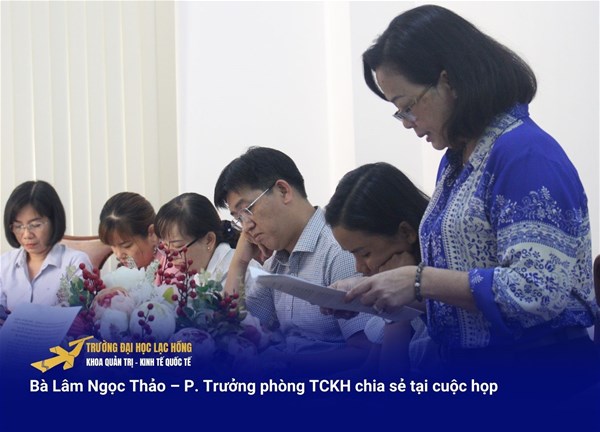
In addition to these advantages, tourism business activities among households remain spontaneous, lacking an organized system and professional tourism workforce, and are limited in professionalism, diversity, and large-scale service capacity. In particular, product quality and design have not received sufficient attention, and modern cultivation techniques have not been widely applied to ensure attractive product presentation. Tourism models lack adequate infrastructure, and many facilities have not yet been authorized for use, such as swimming pools, fish ponds, restrooms, tents, etc.
With the aspiration for Long Khanh City to become a center of Dong Nai Province—a hub connecting neighboring provinces and cities, and a tourism bridge linking destinations in a chain—there is a need for distinctive features to differentiate it from other areas. The development of a “Garden Tourism Village” is proposed to attract visitors. Comprehensive planning of small, spontaneous tourism villages is necessary to meet tourists’ needs for shopping, dining, and accommodation. Distinctive seasonal and monthly cultural activities should be created; garden houses and accommodation addresses should be developed; shared spaces for development should be ensured; specialized enterprises should be invited to invest; and employment issues for local residents should be addressed.
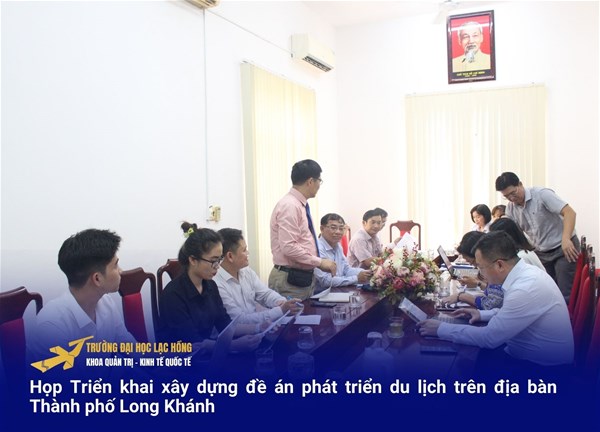
At the meeting, representing Lac Hong University, PhD Nguyen Van Tan – Dean of FAIE – provided comments and contributions. He affirmed that Long Khanh City has significant potential to develop the “smokeless industry” in a sustainable and long-term direction, addressing employment and social welfare issues for local residents. Particularly in training and consultancy for the Tourism and Travel Management program at Lac Hong University, lecturers of FAIE believe they can support the development of the garden eco-tourism project, connect tourism enterprises for investment and development, and position Long Khanh City as a destination and stopover. Preliminary suggestions included conducting surveys on satisfaction levels among those wishing and not wishing to engage in tourism business within the planned development area, and addressing potential conflicts and concerns among residents. It is necessary to define specific tourism routes, develop products, identify target customers, and create a website for selling entrance tickets. Training and capacity-building programs for tourism service staff are also needed. Above all, time should be allocated for stakeholders to work together in greater depth on each issue and requirement.
The meeting concluded at 16:30 on the same day.
