
Activities
CONTENTS
Teaching Methods for the Economic Law Major.
Compared to learning methods, teaching methods also play an extremely important role in students’ learning processes as well as outcomes.
The Economic Law major is increasingly playing an important role in applying the law to facilitate social development and strengthen the economy. This requires each Economic Law graduate to be thoroughly equipped with essential knowledge and skills when entering the labor market. Recognizing this importance, lecturers of the Economic Law major at Lac Hong University continuously innovate their teaching methods and knowledge delivery approaches to make learning more engaging and help students grasp core concepts, thereby enabling them to apply theory to practice effectively.
Let the Economic Law Club share some effective teaching methods that have been and are being applied by lecturers at Lac Hong University.
METHOD 1: Case-Based Teaching
For abstract subjects such as Criminal Law, instead of solely delivering theoretical lectures, lecturers may collaborate with students to develop practical scenarios and real-life cases that have been adjudicated or are currently under trial. Students then analyze, discuss, and work together to identify the most appropriate solutions. Lecturers always respect students’ opinions, solutions, and individual legal perspectives, and create the most favorable conditions for students to express their viewpoints on issues related to the subject matter. The diversity of scenarios encourages students to enhance proactiveness and creativity, while also fostering a comfortable learning atmosphere, helping them absorb content more easily, deeply, and retain knowledge longer.
METHOD 2: Problem-Based Learning
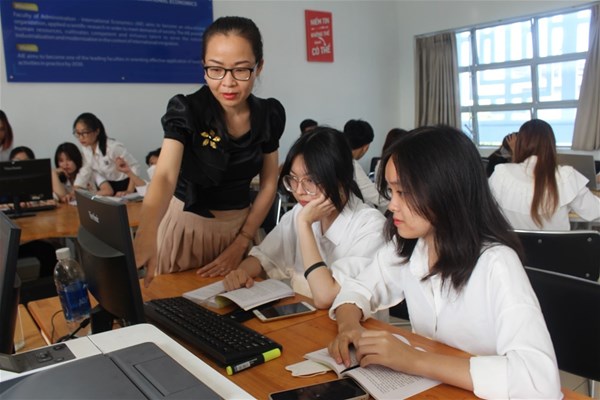
The problem-posing method is typically applied to subjects with a high volume of specialized knowledge that may easily cause confusion among different contents and where students have limited practical exposure, such as Tax Law and Real Estate Business Law. Students are placed in a situation containing conflicts and unresolved issues. Their task is to use logical thinking combined with acquired knowledge to identify the issues within the situation and resolve them in accordance with practical realities and current laws. In this method, lecturers act as supervisors of students’ discussions, supporting them in synthesizing issues, and enhancing teamwork skills as well as initiative in seeking and processing information. This method helps students actively engage with the problems presented.
METHOD 3: Group-Based Learning
Lac Hong University always provides optimal facilities to ensure an effective learning environment. The University has equipped group study rooms across its campuses to support both teaching and learning activities effectively.
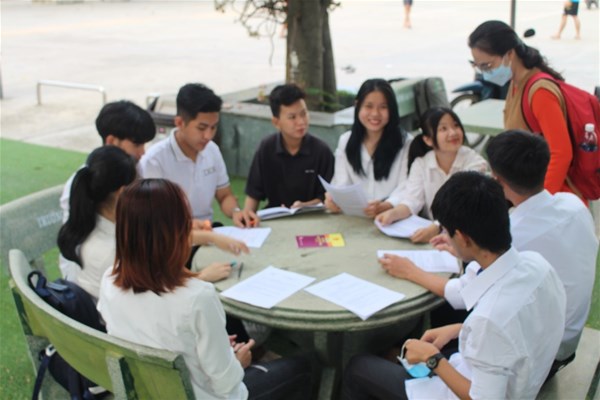
Lecturers organize students into small groups to discuss, exchange ideas, and resolve assigned problems under the guidance of instructors. Most lecturers apply this method because of its high effectiveness and its ability to help students acquire knowledge more quickly. Through this approach, students actively collaborate with lecturers, independently explore and identify solutions to problems, thereby maintaining proactiveness and positivity throughout group activities.
METHOD 4: Lecture-Based Teaching
Lecturing is a traditional method within the Vietnamese education system, yet it remains highly effective and continues to be widely adopted as a primary teaching approach. For the Economic Law major, this method is indispensable. When teaching general theoretical subjects, lecturers use explanatory methods to help students easily access foundational knowledge necessary for studying specialized courses effectively. Lecturers use dynamic verbal presentations combined with information technology and audiovisual tools such as computers and supporting software to systematically present study materials and course content. The University has also equipped modern projectors, televisions, and sound systems to enhance teaching and learning effectiveness. This method provides students with systematically structured knowledge, enabling them to absorb content delivered by lecturers efficiently.
METHOD 5: Promoting Students’ Creativity and Independent Thinking
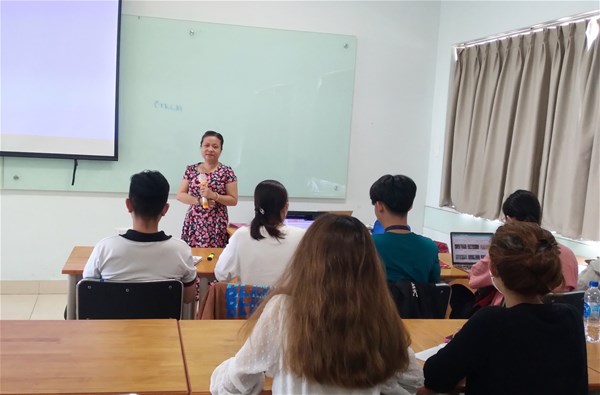
In the course Commercial Contract Drafting Techniques, taught by MB Huynh Thi Nhu Hieu, special attention is given to fostering students’ independent and creative thinking by encouraging them to present their own viewpoints and develop creative contractual clauses. Lecturers create opportunities for students to discuss and express their perspectives on lesson-related issues as well as broader topics within the field of Economic Law. This method enhances teaching effectiveness and enables students to maximize their self-learning abilities.
Through these teaching methods, students in general, and students at Lac Hong University in particular, can more easily grasp and absorb knowledge in the most efficient manner by proactively solving problems assigned by lecturers. Most importantly, students must practice self-discipline, engage in self-study, and take initiative in seeking knowledge. Lecturers will always accompany and support them in exploring and unlocking their inner potential.
